Nama dan identitas
Bangsa Newar · Newa · Newar · Newars · Newa people · Newa nation · Newar people
Adaptasi sumber terbuka. Uraian diterjemahkan otomatis menggunakan OPUS-MT en-id (lokal); teks asal dapat diperiksa di setiap bagian. Identitas, lisensi, dan kelengkapan diperiksa secara otomatis. Belum ada tinjauan komunitas atau ahli yang tercatat.
Identitas dan konteks kelompok#
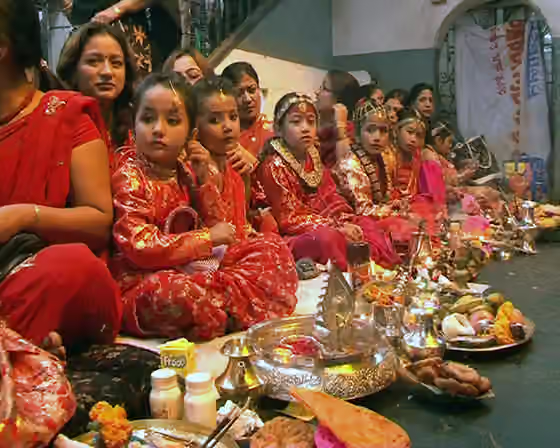
Newar (; Newar: 𑐣𑐾𑐰𑐵𑐬, Devanagari: नेवार, endonym: Newa; Newar: 𑐣𑐾𑐰𑐵𑑅, Devanagari: नेवाः), atau Nepami, terutama penduduknya di Lembah Kathmandu Nepal dan sekitarnya, dan pencipta warisan dan peradaban bersejarahnya. Newars adalah kelompok linguistik dan budaya yang berbeda, terutama Indo-Aryan dan etnis Tibeto-Burman, yang berbagi bahasa yang sama, Nepal Bhasa, dan terutama praktik Hinduisme Newar dan Buddhisme Newar.
Newars telah mengembangkan pembagian tenaga kerja dan sebuah peradaban kota yang canggih tidak terlihat di tempat lain di pegunungan Himalaya. Newars terus mereka kuno tradisi dan praktik dan kebanggaan diri sendiri sebagai penjaga benar agama, budaya dan peradaban Nepal. Para pendatang baru dikenal karena sumbangsih mereka terhadap kebudayaan, seni, sastra, perdagangan, pertanian dan masakan. Sekarang, mereka secara konsisten menjadi masyarakat yang paling maju secara ekonomi dan sosial di Nepal, menurut Indeks Pengembangan Manusia tahunan yang diterbitkan UNDP. Para pendatang baru berada di peringkat ke-8 kelompok etnis terbesar di Nepal menurut sensus Nepal 2021 yang berjumlah 1.341.363 orang yang membentuk 4.6% dari total populasi.
Rujukan bagian ini · revisi 1378690088Baca teks sumber bahasa Inggris
Newar (; Newar: 𑐣𑐾𑐰𑐵𑐬, Devanagari: नेवार, endonym: Newa; Newar: 𑐣𑐾𑐰𑐵𑑅, Devanagari: नेवाः), or Nepami, are primarily inhabitants in Kathmandu Valley of Nepal and its surrounding areas, and the creators of its historic heritage and civilisation. Newars are a distinct linguistic and cultural group, primarily Indo-Aryan and Tibeto-Burman ethnicities, who share a common language, Nepal Bhasa, and predominantly practice Newar Hinduism and Newar Buddhism.
Newars have developed a division of labour and a sophisticated urban civilisation not seen elsewhere in the Himalayan foothills. Newars have continued their age-old traditions and practices and pride themselves as the true custodians of the religion, culture and civilisation of Nepal. Newars are known for their contributions to culture, art and literature, trade, agriculture and cuisine. Today, they consistently rank as the most economically and socially advanced community in Nepal, according to the annual Human Development Index published by UNDP. Newars are ranked the 8th largest ethnic group in Nepal according to the 2021 Nepal census numbering 1,341,363 people constituting 4.6% of the total population.
Latar dan asal-usul menurut sumber#
Istilah "Nepāl", "Newār", "Newāl" dan "Nepār" adalah bentuk kata yang berbeda secara fonetik, dan contoh dari berbagai bentuk muncul dalam teks dalam waktu yang berbeda dalam sejarah. Nepal adalah bentuk sastra (Sansekerta) dan Newar adalah bentuk koloquial (Prakrit). Inskripsi bahasa Sansekerta yang berasal dari 512 di Tistung, sebuah lembah di sebelah barat Kathmandu, memuat frasa "kesejahteraan kepada Nepal" yang menunjukkan bahwa istilah "Nepal" digunakan untuk memaksudkan baik negara maupun rakyat.
Istilah "Newar" atau "Newa," yang mengacu kepada "penduduk Nepal" muncul untuk pertama kalinya dalam sebuah inskripsi yang bertanggal 1654 di Kathmandu. Imam Yesuit Italia Ippolito Desideri (1684–1733) yang pergi ke Nepal pada tahun 1721 telah menulis bahwa penduduk asli Nepal disebut Newars. Telah disarankan bahwa "Nepal" mungkin merupakan sansekertaisasi dari "Newar" atau "Newar" mungkin bentuk selanjutnya dari "Nepal." Menurut penjelasan lain, kata "Newar" dan "Newari" adalah bentuk-bentuk koloquial yang muncul dari mutasi P ke W, dan L ke R. Sebagai hasil dari proses fanological dari menjatuhkan konsonan terakhir dan memperpanjang vokal, "Newā" untuk Newār atau Newāl, dan "Nepāl" untuk Nepāl digunakan dalam bahasa biasa. Para pendatang baru adalah penduduk Lembah Kathmandu yang tidak bersifat alami.
Rujukan bagian ini · revisi 1378690088Baca teks sumber bahasa Inggris
The terms "Nepāl", "Newār", "Newāl" and "Nepār" are phonetically different forms of the same word, and instances of the various forms appear in texts in different times in history. Nepal is the literary (Sanskrit) form and Newar is the colloquial (Prakrit) form. A Sanskrit inscription dated to 512 in Tistung, a valley to the west of Kathmandu, contains the phrase "greetings to the Nepals" indicating that the term "Nepal" was used to refer to both the country and the people.
The term "Newar" or "Newa:" referring to "inhabitant of Nepal" appeared for the first time in an inscription dated 1654 in Kathmandu. Italian Jesuit priest Ippolito Desideri (1684–1733) who traveled to Nepal in 1721 has written that the natives of Nepal are called Newars. It has been suggested that "Nepal" may be a sanskritization of "Newar", or "Newar" may be a later form of "Nepal". According to another explanation, the words "Newar" and "Newari" are colloquial forms arising from the mutation of P to W, and L to R. As a result of the phonological process of dropping the last consonant and lengthening the vowel, "Newā" for Newār or Newāl, and "Nepā" for Nepāl are used in ordinary speech. Newars are the indigenious inhabitants of Kathmandu Valley.
Perubahan dan konteks sejarah#
Pembagian Newars memiliki perkembangan sejarah yang berbeda. Identitas umum Newar terbentuk di Lembah Kathmandu. Hingga penaklukan lembah itu oleh Kerajaan Gorkha pada tahun 1769, semua orang yang pernah menghuni lembah itu pada waktunya adalah orang Newar atau progenitor Newar. Jadi, sejarah Newar berkorelasi sejarah Lembah Kathmandu (atau Mandala Nepal) sebelum pembentukan negara bagian Nepal modern.
Sejarah paling awal yang diketahui Newar dan Lembah Kathmandu bercampur dengan mitologi yang dicatat dalam sejarah sejarah. Salah satu ayat seperti itu, yang menceritakan penciptaan lembah itu, adalah Swayambhu Purana. Menurut ayat Buddha ini, Lembah Kathmandu adalah danau raksasa sampai Bodhisattva Manjusri, dengan bantuan pedang suci, memotong celah di bukit-bukit sekitarnya dan membiarkan air keluar. Legenda ini didukung oleh bukti geologi sebuah dasar danau kuno, dan menyediakan penjelasan untuk kesuburan yang tinggi tanah Lembah Kathmandu.
Rujukan bagian ini · revisi 1378690088Baca teks sumber bahasa Inggris
The divisions of the Newars had different historical developments. The common identity of the Newar was formed in the Kathmandu Valley. Until the conquest of the valley by the Gorkha Kingdom in 1769, all the people who had inhabited the valley at any point in time were either Newar or progenitors of Newar. So, the history of Newar correlates to the history of the Kathmandu Valley (or Nepala Mandala) prior to the establishment of the modern state of Nepal.
The earliest known history of Newar and the Kathmandu Valley blends with mythology recorded in historical chronicles. One such text, which recounts the creation of the valley, is the Swayambhu Purana. According to this Buddhist scripture, the Kathmandu Valley was a giant lake until the Bodhisattva Manjusri, with the aid of a holy sword, cut a gap in the surrounding hills and let the water out. This legend is supported by geological evidence of an ancient lakebed, and it provides an explanation for the high fertility of the Kathmandu Valley soil.
Sumber dan cakupan
Kontributor Wikipedia bahasa Inggris · revisi artikel 2026 · diakses 2026-10-14.
Artikel tentang kelompok dalam konteks dokumentasinya; tidak mewakili semua anggota atau semua masa. Bagian uraian dipilih, penanda format dibersihkan, dan diterjemahkan otomatis.
Kontributor Wikipedia · CC BY-SA 4.0 · Riwayat dan kredit penulis · pemilihan bagian, penyuntingan bahasa, dan pembersihan penanda format serta terjemahan otomatis merupakan perubahan dari sumber.
Q524007 — identitas dan asosiasi Wikidata · Kontributor Wikidata · CC0 · revisi 2543527359. Identitas P31 dan asosiasi negara P17; bukan batas budaya, kepemilikan, atau keyakinan semua anggota. Penjelas tambahan dan rujukan dapat diperiksa pada sumber.
Informasi rilis dan ekspor metadata · Ketentuan penggunaan ulang
Pemeriksaan otomatis identitas, lisensi, sumber revisi, dan kelengkapan; bukan tinjauan ahli. Belum ada tinjauan komunitas atau ahli yang tercatat untuk profil ini. Uraian ini belum mencakup seluruh variasi yang mungkin ada.
Baca metode penyusunan