Nama dan identitas
British Invasion · Nama lain belum tercatat dalam profil ini.
Adaptasi sumber terbuka. Uraian diterjemahkan otomatis menggunakan OPUS-MT en-id (lokal); teks asal dapat diperiksa di setiap bagian. Identitas, lisensi, dan kelengkapan diperiksa secara otomatis. Belum ada tinjauan komunitas atau ahli yang tercatat.
Identitas dan konteks budaya#
Invasi Inggris adalah fenomena budaya pertengahan tahun 1960-an, ketika musik rock and pop beraksi dari Inggris dan aspek-aspek lain dari budaya Inggris menjadi populer di Amerika Serikat dengan pengaruh signifikan terhadap meningkatnya "counterkultur" di kedua sisi Samudera Atlantik. British pop and rock groups like the Beatles and the Rolling Stones and the solo artists like Donovan and Dusty Springfield were at the fronter of the "invasion."
Rujukan bagian ini · revisi 1379613547Baca teks sumber bahasa Inggris
The British Invasion was a cultural phenomenon of the mid-1960s, when rock and pop music acts from the United Kingdom and other aspects of British culture became popular in the United States with significant influence on the rising "counterculture" on both sides of the Atlantic Ocean. British pop and rock groups such as the Beatles and the Rolling Stones as well as solo artists such as Donovan and Dusty Springfield were at the forefront of the "invasion."
Uraian sumber 2#
Nada dan citra musik rock and roll Amerika yang memberontak dan musisi blues menjadi populer di kalangan pemuda Inggris pada akhir 1950-an. Sementara upaya komersial awal untuk meniru Amerika rock and roll sebagian besar gagal, trad jazz–inspired gila skiffle, dengan do-it-diri sikap, dihasilkan dua hits top-ten di AS oleh Lonnie Donegan. Kelompok muda Inggris mulai menggabungkan berbagai gaya Inggris dan Amerika di berbagai bagian Kerajaan Inggris, seperti gerakan di Liverpool yang dikenal sebagai Merseybeat atau "beat boom" (petarungan jantung).
Meskipun aksi Amerika populer di Inggris, tidak banyak aksi Inggris yang berhasil di Amerika Serikat sebelum tahun 1964. Cliff Richard, yang merupakan tindakan terlaris Inggris di Inggris pada saat itu, hanya memiliki satu Top 40 hit di AS, dengan "Living Doll" pada tahun 1959. Bersama dengan Donegan, pengecualian dari tren ini adalah angka satu AS yang hits "Auf Wiederseh'n, Sayang" oleh Vera Lynn pada tahun 1952 (Lynn juga memiliki huruf yang lebih rendah, tapi lebih bertahan, hit in "We'll Meet Again"), "He's Got the Whole World in His Hands" oleh Laurie London pada tahun 1958, dan instrumen "Stranger on the Shore" oleh Acker Bilk dan "Tellstar" oleh Tornado, keduanya pada tahun 1962. Juga pada Hot 100, "Manhattan Spiritual" oleh Reg Owen dan Orchestra-Nya mencapai nomor sepuluh pada bulan Februari 1959, Hayley Mills "Mari Bersama" dari The Parent Trap puncak nomor 8 pada bulan Oktober 1961, dan pada tahun 1962, "Midnight di Moskow" oleh Kenny Ball mencapai nomor dua pada bulan Maret, versi Springfields dari "Silver Threads and Golden Needles" puncak pada dua puluh September, dan Frank I's "I Remember You" mencapai nomor lima bulan Oktober.
Rujukan bagian ini · revisi 1379613547Baca teks sumber bahasa Inggris
The rebellious tone and image of American rock and roll and blues musicians became popular with British youth in the late 1950s. While early commercial attempts to replicate American rock and roll mostly failed, the trad jazz–inspired skiffle craze, with its do-it-yourself attitude, produced two top-ten hits in the US by Lonnie Donegan. Young British groups started to combine various British and American styles in different parts of the United Kingdom, such as the movement in Liverpool known as Merseybeat or the "beat boom".
While American acts were popular in the United Kingdom, few British acts had achieved any success in the United States prior to 1964. Cliff Richard, who was the best-selling British act in the United Kingdom at the time, had only one Top 40 hit in the US, with "Living Doll" in 1959. Along with Donegan, exceptions to this trend were the US number-one hits "Auf Wiederseh'n, Sweetheart" by Vera Lynn in 1952 (Lynn also had a lower-charting, but more enduring, hit in "We'll Meet Again"), "He's Got the Whole World in His Hands" by Laurie London in 1958, and the instrumentals "Stranger on the Shore" by Acker Bilk and "Telstar" by the Tornados, both in 1962. Also on the Hot 100, "Manhattan Spiritual" by Reg Owen and His Orchestra reached number ten in February 1959, Hayley Mills' "Let's Get Together" from The Parent Trap peaked number eight in October 1961, and in 1962, "Midnight in Moscow" by Kenny Ball reached number two in March, the Springfields' version of "Silver Threads and Golden Needles" peaked at number twenty in September, and Frank Ifield's "I Remember You" reached number five in October.
Uraian sumber 3#
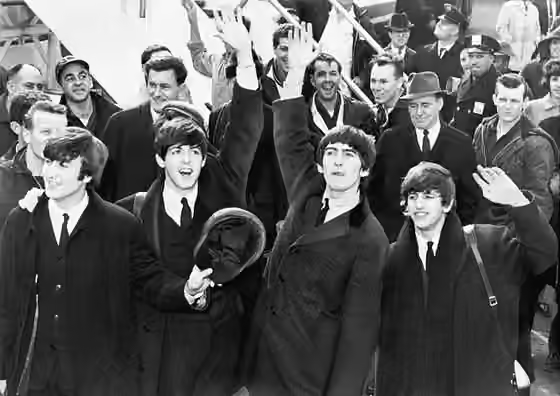
Pada bulan Oktober 1963, artikel surat kabar pertama tentang hiruk-pikuk di Inggris sekitarnya Beatles muncul secara nasional di AS. The Beatles' November 4 Royal Varietas Performan di depan Ratu Ibu memicu industri musik dan kepentingan media dalam kelompok.
Pada tanggal 10 Desember, CBS Evening News jangkar Walter Cronkite, mencari sesuatu yang positif untuk dilaporkan, mengulang sebuah cerita Beatlemania yang awalnya disiarkan pada edisi 22 November CBS Morning News dengan Mike Wallace tapi diselubung malam itu karena pembunuhan Presiden AS John Kennedy. Setelah melihat laporan itu, Marsha Albert dari Silver Spring, 15 tahun, Maryland, menulis surat keesokan harinya untuk disc jockey Carroll James di stasiun radio WWDC bertanya, "Mengapa kita tidak bisa memiliki musik seperti itu di sini di Amerika?"
Rujukan bagian ini · revisi 1379613547Baca teks sumber bahasa Inggris
In October 1963, the first newspaper articles about the frenzy in England surrounding the Beatles appeared nationally in the US. The Beatles' November 4 Royal Variety Performance in front of the Queen Mother sparked music industry and media interest in the group.
On December 10, CBS Evening News anchor Walter Cronkite, looking for something positive to report, re-ran a Beatlemania story that originally aired on the November 22 edition of the CBS Morning News with Mike Wallace but was shelved that night because of the assassination of US President John Kennedy. After seeing the report, 15-year-old Marsha Albert of Silver Spring, Maryland, wrote a letter the following day to disc jockey Carroll James at radio station WWDC asking, "Why can't we have music like that here in America?"
Sumber dan cakupan
Kontributor Wikipedia bahasa Inggris · revisi artikel 2026 · diakses 2026-10-15.
Artikel tentang entitas budaya dalam konteks dokumentasinya; tidak mewakili semua variasi, pelaku, atau semua masa. Bagian uraian dipilih, penanda format dibersihkan, dan diterjemahkan otomatis.
Kontributor Wikipedia · CC BY-SA 4.0 · Riwayat dan kredit penulis · pemilihan bagian, penyuntingan bahasa, dan pembersihan penanda format serta terjemahan otomatis merupakan perubahan dari sumber.
Q211418 — identitas dan asosiasi Wikidata · Kontributor Wikidata · CC0 · revisi 2554600038. Klasifikasi P31 dan asosiasi negara P17; bukan batas budaya, kepemilikan, atau keyakinan semua pelaku. Penjelas tambahan dan rujukan dapat diperiksa pada sumber.
Informasi rilis dan ekspor metadata · Ketentuan penggunaan ulang
Pemeriksaan otomatis identitas, lisensi, sumber revisi, dan kelengkapan; bukan tinjauan ahli. Belum ada tinjauan komunitas atau ahli yang tercatat untuk profil ini. Uraian ini belum mencakup seluruh variasi yang mungkin ada.
Baca metode penyusunan