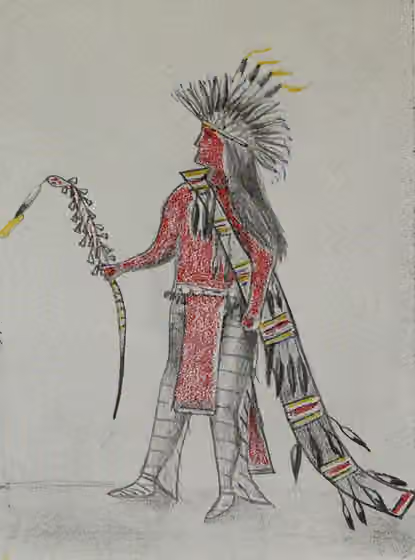
Nama dan identitas
Cheyenne · Cheyennes · Cheyenne people · Cheyenne Indians · Suhtai · Suhtai Indians · Suhtaio · Suhtaio Indians · TsisTsisTsas · TsisTsisTsas Indians · Tsitsistas · Tsitsistas Indians
Adaptasi sumber terbuka. Uraian diterjemahkan otomatis menggunakan OPUS-MT en-id (lokal); perbaikan karakter dan repetisi; teks asal dapat diperiksa di setiap bagian. Identitas, lisensi, dan kelengkapan diperiksa secara otomatis. Belum ada tinjauan komunitas atau ahli yang tercatat.
Identitas dan konteks kelompok#
Cheyenne (Sy-AN, pemalu-EN) adalah orang Indigenus dari Dataran Besar. Cheyenne terdiri dari dua suku asli Amerika, Só'taeo'o atau Só'taétaneo'o (Lebih sering dieja sebagai Suhtai atau Sutaio) dan tzichioceanissigchi (juga disebut Tsitistas, [t͡sɪt͡shɪstʰɑs]); suku-suku bergabung pada awal abad ke - 19. Hari ini, orang Cheyenne terpecah menjadi dua negara yang diakui secara federal: Cheyenne Selatan, yang terdaftar dalam suku Cheyenne dan Arapaho di Oklahoma, dan Cheyenne Utara, yang telah terdaftar di Suku Cheyenne Utara Reservasi Indian Utara di Montana. Bahasa Cheyenne milik keluarga berbahasa Algonquian.
Selama 400 tahun terakhir, Cheyenne telah mengubah gaya hidup mereka dari Great Lakes Woodlands ke Dataran Utara dan pada pertengahan abad-19, pemerintah AS memaksa mereka ke reservasi. Pada saat kontak pertama mereka dengan orang Eropa pada abad ke - 16, Cheyenne tinggal di daerah yang sekarang disebut Minnesota. Mereka adalah sekutu dekat Arapaho dan longgar selaras dengan Lakota. Pada awal abad ke - 18, mereka dipaksa ke barat oleh suku-suku lain melintasi Sungai Missouri dan ke North dan South Dakota, tempat mereka mengadopsi kebudayaan kuda. Setelah menetap di Black Hills dari Dakota Selatan dan Negeri Powder River di Montana dan Wyoming saat ini, mereka memperkenalkan budaya kuda kepada suku Lakota sekitar tahun 1730. Kelompok utama Cheyenne, Tsêhéstáno, pernah terdiri dari sepuluh band yang menyebar di Great Plains dari Colorado selatan ke Black Hills di Dakota Selatan.
Rujukan bagian ini · revisi 1379226800Baca teks sumber bahasa Inggris
The Cheyenne ( shy-AN, shy-EN) are an Indigenous people of the Great Plains. The Cheyenne comprise two Native American tribes, the Só'taeo'o or Só'taétaneo'o (more commonly spelled as Suhtai or Sutaio) and the tzichioceanissigchi (also spelled Tsitsistas, [t͡sɪt͡shɪstʰɑs]); the tribes merged in the early 19th century. Today, the Cheyenne people are split into two federally recognized nations: the Southern Cheyenne, who are enrolled in the Cheyenne and Arapaho Tribes in Oklahoma, and the Northern Cheyenne, who are enrolled in the Northern Cheyenne Tribe of the Northern Cheyenne Indian Reservation in Montana. The Cheyenne language belongs to the Algonquian language family.
Over the past 400 years, the Cheyenne have changed their lifestyles from Great Lakes woodlands to Northern Plains and by the mid-19th century, the US government forced them onto reservations. At the time of their first European contact in the 16th century, the Cheyenne lived in what is now Minnesota. They were close allies of the Arapaho and loosely aligned with the Lakota. By the early 18th century, they were forced west by other tribes across the Missouri River and into North and South Dakota, where they adopted the horse culture. Having settled the Black Hills of South Dakota and the Powder River Country of present-day Montana and Wyoming, they introduced the horse culture to Lakota people around 1730. The main group of Cheyenne, the Tsêhéstáno, was once composed of ten bands that spread across the Great Plains from southern Colorado to the Black Hills in South Dakota.
Nama dan istilah#
Nama "Cheyenne" berasal dari exonym suku Lakota Sioux Šahíyena yang berarti "sedikit Šahíya". Identitas Šahíya tidak diketahui, tapi banyak suku Great Plains berasumsi bahwa itu berarti Cree atau orang lain yang berbicara bahasa Algonquian yang berhubungan dengan Cree dan Cheyenne. Nama Cheyenne untuk Ojibwe adalah Sáhea'eo'o, sebuah kata yang terdengar mirip dengan kata Lakota Šahíya.
Lain dari etimologi umum untuk Cheyenne adalah "sedikit seperti [orang] asing pidato" (secara harfiah, "red-talker"). Menurut George Bird Grinnell, suku Lakota menyebut diri mereka sendiri dan sesama band Siouan-language sebagai "pembicara kulit putih", dan orang-orang dari keluarga bahasa lain, seperti Algonquian Cheyenne, sebagai "pengucapan merah" (Šahíyena). Istilah untuk tanah air Cheyenne adalah Tsistano.
Rujukan bagian ini · revisi 1379226800Baca teks sumber bahasa Inggris
The name "Cheyenne" derives from the Lakota Sioux exonym Šahíyena meaning "little Šahíya". The identity of the Šahíya is not known, but many Great Plains tribes assume that it means Cree or another people who spoke an Algonquian language related to Cree and Cheyenne. The Cheyenne name for Ojibwe is Sáhea'eo'o, a word that sounds similar to the Lakota word Šahíya.
Another of the common etymologies for Cheyenne is "a bit like the [people of an] alien speech" (literally, "red-talker"). According to George Bird Grinnell, the Lakota had referred to themselves and fellow Siouan-language bands as "white talkers", and those of other language families, such as the Algonquian Cheyenne, as "red talkers" (Šahíyena). The term for the Cheyenne homeland is Tsistano.
Bahasa dalam kehidupan kelompok#
Cheyenne dari Montana dan Oklahoma berbicara bahasa Cheyenne, dikenal sebagai Tsėhésenėstsestȯtse (ejaan umum: Tsisinsistots). Sekitar 800 orang berbahasa Cheyenne di Oklahoma. Hanya ada segelintir kosakata perbedaan antara dua lokasi. Alfabet Cheyenne berisi 14 huruf. Bahasa Cheyenne adalah salah satu kelompok bahasa Algonquian yang lebih besar. Sebelumnya, Só'taeo'o (Só'taétaneo'o) atau Suhtai (Sutio) band Southern dan Cheyenne Utara berbicara Só'taéka'ėškóne atau Só'taenėstsestȯtse, bahasa yang begitu dekat dengan Tsėhésenėstsestȯtse (Cheyenne bahasa), yang kadang-kadang disebut dialek Cheyenne.
Rujukan bagian ini · revisi 1379226800Baca teks sumber bahasa Inggris
The Cheyenne of Montana and Oklahoma speak the Cheyenne language, known as Tsėhésenėstsestȯtse (common spelling: Tsisinstsistots). Approximately 800 people speak Cheyenne in Oklahoma. There are only a handful of vocabulary differences between the two locations. The Cheyenne alphabet contains 14 letters. The Cheyenne language is one of the larger Algonquian-language group. Formerly, the Só'taeo'o (Só'taétaneo'o) or Suhtai (Sutaio) bands of Southern and Northern Cheyenne spoke Só'taéka'ėškóne or Só'taenėstsestȯtse, a language so close to Tsėhésenėstsestȯtse (Cheyenne language), that it is sometimes termed a Cheyenne dialect.
Perubahan dan konteks sejarah#
Menurut sejarah suku, selama abad ke - 17, Cheyenne dikendalikan oleh Assiniboine (Hóheeheo'o) Dari wilayah Great Lakes hingga saat ini Minnesota dan Dakota Utara, di mana mereka mendirikan desa. Desa Cheyenne kuno yang paling menonjol adalah desa Biesterfeldt, di Dakota Utara sebelah timur sepanjang Sungai Sheyenne. Mereka pertama kali mencapai Sungai Missouri pada tahun 1676. Analisis baru-baru ini tentang posit catatan awal bahwa setidaknya beberapa Cheyenne tetap di daerah Mille Lac Minnesota sampai sekitar 1765, ketika Ojibwe mengalahkan Dakota dengan senjata api — mendorong Cheyenne, selanjutnya, ke Sungai Minnesota, tempat mereka dilaporkan berada pada tahun 1766.
Rujukan bagian ini · revisi 1379226800Baca teks sumber bahasa Inggris
According to tribal history, during the 17th century, the Cheyenne were driven by the Assiniboine (Hóheeheo'o) from the Great Lakes region to present-day Minnesota and North Dakota, where they established villages. The most prominent of the ancient Cheyenne villages is Biesterfeldt Village, in eastern North Dakota along the Sheyenne River. They first reached the Missouri River in 1676. A more recent analysis of early records posits that at least some of the Cheyenne remained in the Mille Lac region of Minnesota until about 1765, when the Ojibwe defeated the Dakota with firearms — pushing the Cheyenne, in turn, to the Minnesota River, where they were reported in 1766.
Sumber dan cakupan
Kontributor Wikipedia bahasa Inggris · revisi artikel 2026 · diakses 2026-10-14.
Artikel tentang kelompok dalam konteks dokumentasinya; tidak mewakili semua anggota atau semua masa. Bagian uraian dipilih, penanda format dibersihkan, dan diterjemahkan otomatis.
Kontributor Wikipedia · CC BY-SA 4.0 · Riwayat dan kredit penulis · pemilihan bagian, penyuntingan bahasa, dan pembersihan penanda format serta terjemahan otomatis merupakan perubahan dari sumber.
Q322951 — identitas dan asosiasi Wikidata · Kontributor Wikidata · CC0 · revisi 2543502550. Identitas P31 dan asosiasi negara P17; bukan batas budaya, kepemilikan, atau keyakinan semua anggota. Penjelas tambahan dan rujukan dapat diperiksa pada sumber.
Informasi rilis dan ekspor metadata · Ketentuan penggunaan ulang
Pemeriksaan otomatis identitas, lisensi, sumber revisi, dan kelengkapan; bukan tinjauan ahli. Belum ada tinjauan komunitas atau ahli yang tercatat untuk profil ini. Uraian ini belum mencakup seluruh variasi yang mungkin ada.
Baca metode penyusunan