Nama dan identitas
New German School · Neudeutsche Schule · music of the future · Neo-German school · New Weimar school · Weimar school
Adaptasi sumber terbuka. Uraian diterjemahkan otomatis menggunakan OPUS-MT en-id (lokal); teks asal dapat diperiksa di setiap bagian. Identitas, lisensi, dan kelengkapan diperiksa secara otomatis. Belum ada tinjauan komunitas atau ahli yang tercatat.
Identitas dan konteks budaya#
Sekolah Jerman Baru (Jerman: Neudeutsche Schule, diucapkan [ˈnɔʏdɔʏtʃə ˈʃuːlə]) adalah istilah yang diperkenalkan pada tahun 1859 oleh Franz Brendel, editor Neue Zeitschrift für Musik, untuk menggambarkan tren tertentu dalam musik Jerman. Meskipun istilah ini sering digunakan dalam esai dan buku tentang sejarah musik pada abad ke - 19 dan awal abad ke - 20, definisi yang jelas itu rumit.
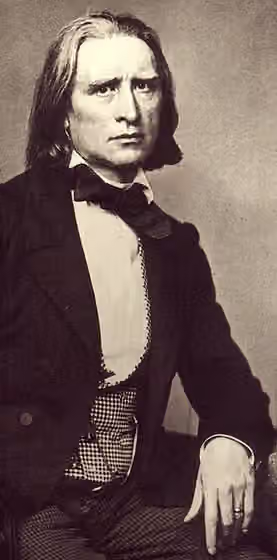
Selain itu, mereka yang dianggap sebagai wakil dari "Sekolah Jerman Baru" tidak semua berlatih musisi. Istilah ini sangat bermasalah. Alkitab telah digunakan oleh orang-orang yang berbeda pada waktu yang berbeda dengan makna yang berbeda. Secara umum disepakati bahwa Franz Liszt dan Richard Wagner adalah salah satu wakil yang paling menonjol dari "Sekolah Jerman Baru" Ada juga konsensus bahwa Johannes Brahms tidak mengambil bagian. Selain itu, penafsiran berbeda. Artikel ini menunjukkan unsur-unsur utama yang berkaitan dengan istilah ini.
Rujukan bagian ini · revisi 1330180693Baca teks sumber bahasa Inggris
The New German School (German: Neudeutsche Schule, pronounced [ˈnɔʏdɔʏtʃə ˈʃuːlə]) is a term introduced in 1859 by Franz Brendel, editor of the Neue Zeitschrift für Musik, to describe certain trends in German music. Although the term has frequently been used in essays and books about music history of the 19th and early 20th centuries, a clear definition is complex.
In addition, those held to be representatives of the "New German School" are not all practising musicians. The term is thus problematic. It has been used by different persons at different times with different meanings. It is generally agreed that Franz Liszt and Richard Wagner were among the most prominent representatives of the "New German School". There is also a consensus that Johannes Brahms did not take part. Beyond this, interpretations differ. The present article sets out the main elements associated with this term.
Uraian sumber 2#
Pada tahun 1858 Franz Liszt dan Franz Brendel memproyeksikan Kongres Musisi (Ge: Tonkünstler-Versamlung). Dana yang diperlukan berasal dari uang muka 1.000 thaler dari Friedrich Wilhelm Konstantin, Pangeran Hohenzollern-Hechingen, yang telah dinegosiasikan oleh Liszt. Liszt juga yang telah membuat saran untuk pertunjukan musik di kongres. Tidak mengherankan bahwa Liszt sendiri adalah komposer kontemporer yang paling sering dilakukan pada acara itu, dan bahwa anggota lingkarannya di Weimar diwakili dengan baik.
Hari ketiga dari Tonküntler-Versamlung, 3 Juni, dibuka oleh Brendel dengan pidato "Zur Anbahnung einer Verständang" (Akhir: "Untuk membuka jalan menuju kesepakatan"). Pidato Brendel adalah asal istilah "Sekolah Jerman Baru." Buku ini diterbitkan sebagai terjemahan tercetak di Neue Zeitschrift für Musik, 10 Juni 1859.
Rujukan bagian ini · revisi 1330180693Baca teks sumber bahasa Inggris
In 1858 Franz Liszt and Franz Brendel projected a Musician's Congress (Ge: Tonkünstler-Versammlung). The necessary funding came from a stipend of 1,000 thaler from Friedrich Wilhelm Konstantin, Prince of Hohenzollern-Hechingen, which Liszt had negotiated. It was also Liszt who had made suggestions for the musical performances at the congress. It is no cause for surprise that Liszt himself was the most frequently performed contemporary composer at the event, and that members of his circle at Weimar were well represented.
The third day of the Tonkünstler-Versammlung, 3 June, was opened by Brendel with a speech "Zur Anbahnung einer Verständigung" (En: "To open the way to an agreement"). Brendel's speech is the origin of the term "New German School". It was published as printed version in the Neue Zeitschrift für Musik of 10 June 1859.
Uraian sumber 3#
Untuk meningkatkan perdebatan di masa depan, Brendel membuat beberapa saran; khususnya, bahwa di masa depan, penggunaan istilah Zukuftsmusik (En: Musik Masa Depan) harus dihindari. Istilah itu berasal dari esai Wagner The Artwork of the Future, namun tidak ada yang sepenuhnya berlangganan gagasan Wagner yang ditata di luar sana tentang cita-citanya untuk drama musik. Gaya Wagner yang berlebihan dan agresif berarti bahwa banyak orang yang ia serang ingin membela diri. Hal ini telah menimbulkan perdebatan yang sengit, bukan sekadar ketidakpemendian dan penghinaan pribadi. Daripada terus menggunakan istilah "Zukuftsmusik," dengan konotasi dari perjuangan masa lalu, Brendel menyarankan menggunakan "Neudeutsche Schule."
Rujukan bagian ini · revisi 1330180693Baca teks sumber bahasa Inggris
To improve future debates, Brendel made several suggestions; in particular, that in future, use of the term Zukunftsmusik (En: Music of the Future) should be avoided. The term had been derived from Wagner's essay The Artwork of the Future, but none fully subscribed to the ideas Wagner set out there about his ideals for music drama. Wagner's exaggerated and combative style meant that many whom he had attacked had wanted to defend themselves. This had caused heated debates, not excluding pettiness and personal insults. Instead of continuing to use the term "Zukunftsmusik", with its connotations of past struggles, Brendel suggested using "Neudeutsche Schule".
Uraian sumber 4#
Menurut Brendel, ada alasan lebih lanjut untuk debat sengit di masa lalu. Orang-orang telah membahas pekerjaan baru tanpa mengenal mereka. Untuk alasan ini Brendel telah mengatur pertunjukan musik dari Tonküntler-Versamlung. Para musisi yang hadir dapat menilai diri mereka sendiri dengan mendengarkan karya-karya itu. Karena tidak ada keraguan bahwa – dalam arti Brendel – Pekerjaan yang dilakukan harus mewakili "Sekolah Jerman Baru", dapat dianggap sebagai memalukan yang juga bekerja oleh Berlioz Prancis dan oleh Liszt, lahir di Hungaria dan biasanya dianggap sebagai Hungaria (meskipun keturunan Jerman), telah dilakukan.
Rujukan bagian ini · revisi 1330180693Baca teks sumber bahasa Inggris
According to Brendel, there had been a further reason for the heated debates of the past. People had discussed new works without actually knowing them. For this reason Brendel had arranged the musical performances of the Tonkünstler-Versammlung. Those musicians present could judge for themselves by listening to the works. Since there was no doubt that – in Brendel's sense – the performed works should represent the "New German School", it could be considered as embarrassing that also works by the Frenchman Berlioz and by Liszt, born in Hungary and usually regarded as Hungarian (albeit of German ancestry), had been performed.
Sumber dan cakupan
Kontributor Wikipedia bahasa Inggris · revisi artikel 2025 · diakses 2026-10-15.
Artikel tentang entitas budaya dalam konteks dokumentasinya; tidak mewakili semua variasi, pelaku, atau semua masa. Bagian uraian dipilih, penanda format dibersihkan, dan diterjemahkan otomatis.
Kontributor Wikipedia · CC BY-SA 4.0 · Riwayat dan kredit penulis · pemilihan bagian, penyuntingan bahasa, dan pembersihan penanda format serta terjemahan otomatis merupakan perubahan dari sumber.
Q681379 — identitas dan asosiasi Wikidata · Kontributor Wikidata · CC0 · revisi 2515877611. Klasifikasi P31 dan asosiasi negara P17; bukan batas budaya, kepemilikan, atau keyakinan semua pelaku. Penjelas tambahan dan rujukan dapat diperiksa pada sumber.
Informasi rilis dan ekspor metadata · Ketentuan penggunaan ulang
Pemeriksaan otomatis identitas, lisensi, sumber revisi, dan kelengkapan; bukan tinjauan ahli. Belum ada tinjauan komunitas atau ahli yang tercatat untuk profil ini. Uraian ini belum mencakup seluruh variasi yang mungkin ada.
Baca metode penyusunan