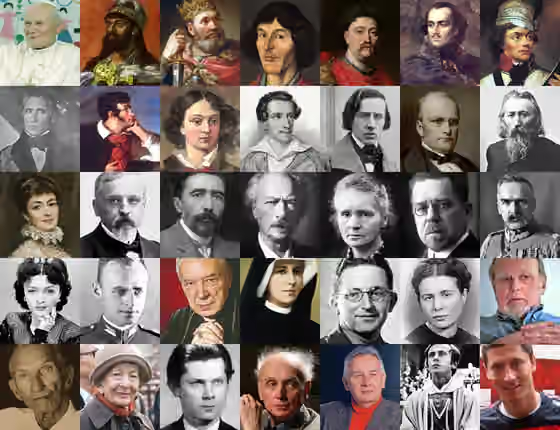
Orang Polandia, atau Polandia, adalah kelompok etnik Slavia Barat dan sebuah bangsa yang memiliki sejarah, kebudayaan, bahasa Polandia, dan diidentifikasi dengan negara Polandia di Eropa Tengah. The preamble to the Constitution of the Republic of Police definite the Polandia Nation as compirrising all the necis of PoIand, terlepas dari warisan atau etnis.
Profil budaya · adaptasi sumberWilayah terkait menurut Wikidata: Polandia·Sumber per 2026-10-14
Dasar ringkasan:Kontributor Wikipedia bahasa Inggris · revisi 1379695758. Terjemahan otomatis; belum ada tinjauan manusia yang tercatat. Teks sumber berbahasa Inggris tersedia di setiap bagian.
Dokumentasi visual*1st row, left to right: Pope John Paul II , Mieszko I – c.Various (See source images for details) · CC BY-SA 4.0. Kredit sumber: self-made from cropped versions of: This work is in the public domain in the United States because it is a work prepared by an officer or employee of the United States Government as part of that person’s official duties under the terms of Title 17, Chapter 1, Section 105 of the US Code. Series: Reagan White House Photographs, 1/20/1981 - 1/20/1989. Collection: White House Photographic Collection, 1/20/1981 - 1/20/1989. cropped by Donrdg54 This image (or other media file) is in the public domain because its copyright has expired. This applies to the United States, Canada, the European Union and those countries with a copyright term of life of the author plus 70 years. Image author en:Jan Matejko This image (or other media file) is in the public domain because its copyright has expired. This applies to the United States, Canada, the European Union and those countries with a copyright term of life of the author plus 70 years. Image author en:Marcello Bacciarelli This image (or other media file) is in the public domain because its copyright has expired. This applies to the United States, Canada, the European Union and those countries with a copyright term of life of the author plus 70 years. Unknown author. FMSky This image (or other media file) is in the public domain because its copyright has expired. This applies to the United States, Canada, the European Union and those countries with a copyright term of life of the author plus 70 years. Image author en:Daniel Schultz Artinpl The author died in 1925, so this work is in the public domain in its country of origin and other countries and areas where the copyright term is the author's life plus 95 years or fewer. This work is in the public domain in the United States because it meets three requirements: it was first published outside the United States (and not published in the U.S. within 30 days), it was first published before 1 March 1989 without copyright notice or before 1964 without copyright renewal or before the source country established copyright relations with the United States, it was in the public domain in its home country (Poland) on the URAA date (1 January 1996). Image author en:Jan Styka . Indefatigable2 This image (or other media file) is in the public domain because its copyright has expired. This applies to the United States, Canada, the European Union and those countries with a copyright term of life of the author plus 70 years. Image author en:Kazimierz Wojniakowski This file is licensed under the Creative Commons Attribution-Share Alike 3.0 Australia license. Original: about 1845. Copy: 1900-1950. Unknown author This image (or other media file) is in the public domain because its copyright has expired. This applies to the United States, Canada, the European Union and those countries with a copyright term of life of the author plus 70 years. Image author en:Daniel Schultz . Artinpl This image (or other media file) is in the public domain because its copyright has expired. This applies to the United States, Canada, the European Union and those countries with a copyright term of life of the author plus 70 years. Anonymous painting. Sasuke88 This work is in the public domain in the United States because it was published (or registered with the U.S. Copyright Office) before January 1, 1927. This work is in the public domain in the United States because it was published (or registered with the U.S. Copyright Office) before January 1, 1927. This work is in the public domain in the United States because it was published (or registered with the U.S. Copyright Office) before January 1, 1927. Image author pl:Tytus Maleszewski This work is in the public domain in its country of origin and other countries and areas where the copyright term is the author's life plus 70 years or fewer. Image author: pl:Jules Mien This work is in the public domain in the United States because it was published (or registered with the U.S. Copyright Office) before January 1, 1927. Image author en:Tadeusz Ajdukiewicz This Swedish photograph is in the public domain in Sweden because one of the following applies: The work is non-artistic (journalistic, etc.) and has been created before 1 January 1972 (SFS 1960:729, § 49a). The photographer is not known, and cannot be traced, and the work has been created before 1 January 1952 (SFS 1960:729, § 44). If the photographer died before 1952. This applies to the United States, Canada, the European Union and those countries with a copyright term of life of the author plus 70 years. Author: Nobel Foundation This work is in the public domain in the United States because it was published (or registered with the U.S. Copyright Office) before January 1, 1927. Author George Charles Beresford This image (or other media file) is in the public domain because its copyright has expired and its author is anonymous.This applies to the European Union and those countries with a copyright term of 70 years after the work was made available to the public and the author never disclosed their identity. Important: Always mention where the image comes from, as far as possible, and make sure the author never claimed authorship. This work is in the public domain in the United States because it was published (or registered with the U.S. Copyright Office) before January 1, 1927. This Swedish photograph is in the public domain in Sweden because one of the following applies: The work is non-artistic (journalistic, etc.) and has been created before 1 January 1972 (SFS 1960:729, § 49a). The photographer is not known, and cannot be traced, and the work has been created before 1 January 1952 (SFS 1960:729, § 44). If the photographer died before 1952This applies to the United States, Canada, the European Union and those countries with a copyright term of life of the author plus 70 years. Author: Nobel Foundation The author died in 1943, so this work is in the public domain in its country of origin and other countries and areas where the copyright term is the author's life plus 75 years or fewer. This work is in the public domain in the United States because it meets three requirements. This work is in the public domain because it was published in the United States between 1927 and 1963, and although there may or may not have been a copyright notice, the copyright was not renewed. For further explanation, see Commons:Hirtle chart and the copyright renewal logs. Note that it may still be copyrighted in jurisdictions that do not apply the rule of the shorter term for US works (depending on the date of the author's death), such as Canada (50 years p.m.a.), Mainland China (50 years p.m.a., not Hong Kong or Macao), Germany (70 years p.m.a.), Mexico (100 years p.m.a.), Switzerland (70 years p.m.a.), and other countries with individual treaties. Author Andrew L. Stone Productions/United Artists This photograph is in the public domain because according to the Art. 3 of copyright law of March 29, 1926 of the Republic of Poland and Art. 2 of copyright law of July 10, 1952 of the People's Republic of Poland, all photographs by Polish photographers (or published for the first time in Poland or simultaneously in Poland and abroad) published without a clear copyright notice before the law was changed on May 23, 1994 are assumed to be in the public domain in Poland. This work is in the public domain in the United States because it meets three requirements. This photograph is in the public domain because according to the Art. 3 of copyright law of March 29, 1926 of the Republic of Poland and Art. 2 of copyright law of July 10, 1952 of the People's Republic of Poland, all photographs by Polish photographers (or published for the first time in Poland or simultaneously in Poland and abroad) published without a clear copyright notice before the law was changed on May 23, 1994 are assumed to be in the public domain in Poland. This work is in the public domain in the United States because it meets three requirements. This work is in the public domain in its country of origin and other countries and areas where the copyright term is the author's life plus 70 years or fewer. This photograph is in the public domain because according to the Art. 3 of copyright law of March 29, 1926 of the Republic of Poland and Art. 2 of copyright law of July 10, 1952 of the People's Republic of Poland, all photographs by Polish photographers (or published for the first time in Poland or simultaneously in Poland and abroad) published without a clear copyright notice before the law was changed on May 23, 1994 are assumed to be in the public domain in Poland. This work is in the public domain in the United States because it meets three requirements. This photograph is in the public domain because according to the Art. 3 of copyright law of March 29, 1926 of the Republic of Poland and Art. 2 of copyright law of July 10, 1952 of the People's Republic of Poland, all photographs by Polish photographers (or published for the first time in Poland or simultaneously in Poland and abroad) published without a clear copyright notice before the law was changed on May 23, 1994 are assumed to be in the public domain in Poland. This work is in the public domain in the United States because it meets three requirements. This file is licensed under the Creative Commons Attribution-Share Alike 4.0 International license. Author Artur Pawłowski(1961) This file is licensed under the Creative Commons Attribution-Share Alike 3.0 Unported, 2.5 Generic, 2.0 Generic and 1.0 Generic license. Author Lilly_M This file is licensed under the Creative Commons Attribution 3.0 Unported license. Author Mariusz Kubik. Kmarius This photograph is in the public domain because according to the Art. 3 of copyright law of March 29, 1926 of the Republic of Poland and Art. 2 of copyright law of July 10, 1952 of the People's Republic of Poland, all photographs by Polish photographers (or published for the first time in Poland or simultaneously in Poland and abroad) published without a clear copyright notice before the law was changed on May 23, 1994 are assumed to be in the public domain in Poland. This work is in the public domain in the United States because it meets three requirements. This file is licensed under the Creative Commons Attribution-Share Alike 4.0 International, 3.0 Unported, 2.5 Generic, 2.0 Generic and 1.0 Generic license. Author Cezary Piwowarski. Cezary p This photograph is in the public domain because according to the Art. 3 of copyright law of March 29, 1926 of the Republic of Poland and Art. 2 of copyright law of July 10, 1952 of the People's Republic of Poland, all photographs by Polish photographers (or published for the first time in Poland or simultaneously in Poland and abroad) published without a clear copyright notice before the law was changed on May 23, 1994 are assumed to be in the public domain in Poland. This work is in the public domain in the United States because it meets three requirements. Author Lech Kowalski & Włodzimierz Pniewski. Szczebrzeszynski This photograph is in the public domain because according to the Art. 3 of copyright law of March 29, 1926 of the Republic of Poland and Art. 2 of copyright law of July 10, 1952 of the People's Republic of Poland, all photographs by Polish photographers (or published for the first time in Poland or simultaneously in Poland and abroad) published without a clear copyright notice before the law was changed on May 23, 1994 are assumed to be in the public domain in Poland. This work is in the public domain in the United States because it meets three requirements. This file is licensed under the Creative Commons Attribution-Share Alike 2.0 Generic license. Arvedui89. Ukuran dan format dioptimalkan tanpa pemotongan; isi dipertahankan. Ketentuan penggunaan sumber tetap berlaku pada turunan.Catatan berkas. Rujukan subjek.
Nama dan identitas
orang Polandia · Polish people · Polacy · Pole · Poles
Adaptasi sumber terbuka. Uraian diterjemahkan otomatis menggunakan OPUS-MT en-id (lokal); perbaikan karakter dan repetisi; teks asal dapat diperiksa di setiap bagian. Identitas, lisensi, dan kelengkapan diperiksa secara otomatis. Belum ada tinjauan komunitas atau ahli yang tercatat.
Orang Polandia, atau Polandia, adalah kelompok etnik Slavia Barat dan sebuah bangsa yang memiliki sejarah, kebudayaan, bahasa Polandia, dan diidentifikasi dengan negara Polandia di Eropa Tengah. The preamble to the Constitution of the Republic of Police definite the Polandia Nation as compirrising all the necis of PoIand, terlepas dari warisan atau etnis. Mayoritas orang Polandia menganut Katolik Roma.
Populasi Polandia yang mengaku diri di Polandia diperkirakan berjumlah 37.394.000 dari penduduk keseluruhan 38.512.000 (didasarkan pada sensus 2011), yang 36.522.000 dinyatakan hanya orang Polandia. Diaspora Polandia yang luas (Polonia) terdapat di seluruh Eurasia, Amerika, dan Australasia. Dewasa ini, konsentrasi kota terbesar di Polandia berada di daerah metropolitan Warsawa dan kawasan kota Katowice.
Polish people, or Poles, are a West Slavic ethnic group and a nation who share a common history, culture, the Polish language and are identified with the country of Poland in Central Europe. The preamble to the Constitution of the Republic of Poland defines the Polish nation as comprising all the citizens of Poland, regardless of heritage or ethnicity. The majority of Poles adhere to Roman Catholicism.
The population of self-declared Poles in Poland is estimated at 37,394,000 out of an overall population of 38,512,000 (based on the 2011 census), of whom 36,522,000 declared Polish alone. A wide-ranging Polish diaspora (the Polonia) exists throughout Eurasia, the Americas, and Australasia. Today, the largest urban concentrations of Poles are within the Warsaw metropolitan area and the Katowice urban area.
Porasi endonym Polandia berasal dari Polans Barat, sebuah suku Lechitic yang tinggal di sekitar Sungai Warta di wilayah Greater Polandia sejak pertengahan abad ke-6 dan seterusnya. Nama suku tersebut berasal dari *pleh2 Eropa Proto-Indo, yang berarti dataran datar atau rata dan sesuai dengan topografi suatu daerah yang awalnya dihuni oleh Polans Barat. Awalan pol- digunakan dalam kebanyakan bahasa dunia ketika mengacu ke Polandia (Polaco Spanyol, Polacche Italia, Polonais Prancis, Kutub Jerman).
Di antara eksonym asing lainnya untuk rakyat Polandia adalah Lituania Lenkai; Hungaria Lengyelek; Turki Leh; Lehastan; dan (Lahestān). Ini berasal dari Lechia, nama kuno untuk Polandia, atau dari suku Lendians. Nama mereka sama-sama berasal dari istilah Polandia Lama lęda, berarti polos atau lapangan.
The Polish endonym Polacy is derived from the Western Polans, a Lechitic tribe which inhabited lands around the River Warta in Greater Poland region from the mid-6th century onward. The tribe's name stems from the Proto-Indo European *pleh₂-, which means flat or flatland and corresponds to the topography of a region that the Western Polans initially settled. The prefix pol- is used in most world languages when referring to Poles (Spanish polaco, Italian polacche, French polonais, German Pole).
Among other foreign exonyms for the Polish people are Lithuanian Lenkai; Hungarian Lengyelek; Turkish Leh; Lehastan; and (Lahestān). These stem from Lechia, the ancient name for Poland, or from the tribal Lendians. Their names are equally derived from the Old Polish term lęda, meaning plain or field.
Orang Polandia adalah keturunan dari campuran berbagai kelompok etnis kuno yang menghuni wilayah modern-hari Polandia sebelum dan pada akhir jaman dahulu. Daerah ini diselesaikan oleh banyak suku dan budaya, termasuk Baltik, Celtic, Jerman, Slavia, Thracian, dan mungkin sisa-sisa sebelumnya Proto-Indo-Eropa dan non-Indo-European masyarakat.
The Polish people are descended from a blend of various ancient ethnic groups that inhabited the territory of modern-day Poland before and during late antiquity. The area was settled by numerous tribes and cultures, including Baltic, Celtic, Germanic, Slavic, Thracian, and possibly remnants of earlier Proto-Indo-Europeans and non-Indo-European peoples.
Polandia adalah bahasa asli sebagian besar orang Polandia. Ini adalah bahasa Slavia Barat dari kelompok Lechitic dan satu - satunya bahasa resmi di Republik Polandia. Bentuk tertulisnya menggunakan alfabet Polandia, yang merupakan abjad Latin dasar dengan tambahan enam tanda diakritik, merangkum 32 huruf. Karena berkerabat dengan Ceko dan Slovakia, bahasa ini sangat dipengaruhi oleh bahasa Latin, Jerman, dan lain-lain sepanjang sejarah. Polandia adalah bahasa homogen – Hampir 97% warga Polandia menyatakan Polandia sebagai bahasa ibu mereka.
Para pembicara Polandia menggunakan bahasa dengan cara yang seragam di sebagian besar Polandia, meskipun banyak dialek dan bahasa sehari-hari dalam wilayah tertentu hidup berdampingan dengan standar Polandia. lects yang paling umum di Polandia adalah Silesia, yang digunakan di Silestia Atas, dan Kashubian, yang secara luas digunakan dalam Pomerania Timur bersejarah (Pomerelia), sekarang di bagian barat laut Polandia. Kashubian memiliki statusnya sendiri sebagai bahasa yang terpisah. Orang-orang Goral di pegunungan selatan menggunakan dialek mereka sendiri yang tidak standar, aksen dan intonasi yang berbeda.
Polish is the native language of most Poles. It is a West Slavic language of the Lechitic group and the sole official language in the Republic of Poland. Its written form uses the Polish alphabet, which is the basic Latin alphabet with the addition of six diacritic marks, totalling 32 letters. Bearing relation to Czech and Slovak, it has been profoundly influenced by Latin, German and other languages over the course of history. Poland is linguistically homogeneous – nearly 97% of Poland's citizens declare Polish as their mother tongue.
Polish-speakers use the language in a uniform manner throughout most of Poland, though numerous dialects and a vernacular language in certain regions coexist alongside standard Polish. The most common lects in Poland are Silesian, spoken in Upper Silesia, and Kashubian, widely spoken in historic Eastern Pomerania (Pomerelia), today in the northwestern part of Poland. Kashubian possesses its own status as a separate language. The Goral people in the mountainous south use their own nonstandard dialect, accenting and different intonation.
Kontributor Wikipedia bahasa Inggris · revisi artikel 2026 · diakses 2026-10-14.
Artikel tentang kelompok dalam konteks dokumentasinya; tidak mewakili semua anggota atau semua masa. Bagian uraian dipilih, penanda format dibersihkan, dan diterjemahkan otomatis.
Kontributor Wikipedia · CC BY-SA 4.0 · Riwayat dan kredit penulis · pemilihan bagian, penyuntingan bahasa, dan pembersihan penanda format serta terjemahan otomatis merupakan perubahan dari sumber.
Q1026 — identitas dan asosiasi Wikidata · Kontributor Wikidata · CC0 · revisi 2549918399. Identitas P31 dan asosiasi negara P17; bukan batas budaya, kepemilikan, atau keyakinan semua anggota. Penjelas tambahan dan rujukan dapat diperiksa pada sumber.
Pemeriksaan otomatis identitas, lisensi, sumber revisi, dan kelengkapan; bukan tinjauan ahli. Belum ada tinjauan komunitas atau ahli yang tercatat untuk profil ini. Uraian ini belum mencakup seluruh variasi yang mungkin ada.