Nama dan identitas
Sovietwave · Soviet wave · Soviet-wave
Adaptasi sumber terbuka. Uraian diterjemahkan otomatis menggunakan OPUS-MT en-id (lokal); teks asal dapat diperiksa di setiap bagian. Identitas, lisensi, dan kelengkapan diperiksa secara otomatis. Belum ada tinjauan komunitas atau ahli yang tercatat.
Identitas dan konteks budaya#
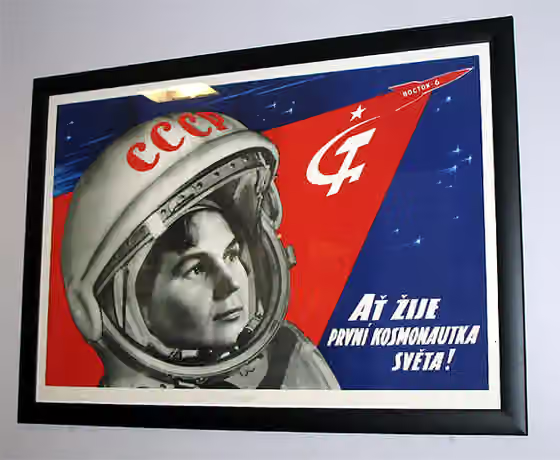
Gelombang Soviet (juga digaya gelombang Soviet atau Soviet-wave) adalah subgensi musik sinthwave dan menemani estetika Internet yang berasal dari bekas Uni Soviet, terutama Rusia. Hal ini dicirikan oleh penekanan pada teknologi dan budaya Uni Soviet, seperti program ruang angkasa Soviet dan arsitektur dan seni retrofuturistik Soviet, dan merupakan ekspresi nostalgia untuk Uni Soviet. Linguist Maria Engström menggambarkan Soviet sebagai pasca-Soviet mitra untuk gelombang uap, membangkitkan kritik nostalgia yang sama dari "kejatuhan masa depan futuritas" dan kerinduan untuk optimisme hilang dari masa lalu.
Rujukan bagian ini · revisi 1371262996Baca teks sumber bahasa Inggris
Sovietwave (also styled Soviet wave or Soviet-wave) is a subgenre of synthwave music and accompanying Internet aesthetic which originates from the former Soviet Union, primarily Russia. It is characterized by an emphasis on the technology and culture of the Soviet Union, such as the Soviet space program and retrofuturistic Soviet era architecture and art, and is an expression of nostalgia for the Soviet Union. Linguist Maria Engström described Sovietwave as the post-Soviet counterpart to vaporwave, evoking a similar nostalgic critique of the "contemporary collapse of futurity" and longing for the lost optimism of a bygone era.
Perubahan dan konteks sejarah#
Pada puncak musik trans di tahun 2000-an, duo PPK trans Rusia menggunakan melodi musik elektronik Soviet sebagai dasar komposisi mereka, merintis fusi musik elektronik kontemporer dengan nostalgia era Soviet.
Sampai 2014, kelompok "Gelombang Soviet" — N.E.M.O., PPVK — sering diklasifikasikan sebagai indie, lo-fi atau jenis lain elektronik. Salah satu pemain pertama yang mengambil kursus untuk mengisolasi diri dari sisa musik elektronik adalah proyek Kharkiv "Mayak"
Rujukan bagian ini · revisi 1371262996Baca teks sumber bahasa Inggris
At the height of the trance music boom in the 2000s, Russian trance duo PPK used the melodies of Soviet electronic music as the basis of their compositions, pioneering the fusion of contemporary electronic music with Soviet-era nostalgia.
Until 2014, the groups of the "Soviet wave" — N.E.M.O., , PPVK — were often classified as indie, lo-fi or other type of electronics. One of the first performers who took a course to isolate themselves from the rest of electronic music was the Kharkiv project "Mayak".
Ciri dalam dokumentasi#
Genre dipengaruhi oleh musik animasi dan film Soviet lama, seperti The Mystery of the Third Planet, Guest from the Future, The Adventures of the Elektronic, Courier, Leopold the Cat, Moscow-Cassiopeia, Office Romance, One Hundred Days After Childhood, Three from Prostokvashino, and Yeralash. Pengaruh musik yang umum pada genre ini mencakup komponis Soviet Vyacheslav Mescherin, Eduard Artemyev dan Aleksandr Zatsepin, dan band Zodiac, Forum, Mayak, dan New Collection. Genre ini juga dipengaruhi oleh karya para musisi Barat yang populer di Uni Soviet, seperti Depeche Mode, Digital Emotion, dan Modern Talking.
Peneliti Rusia Ivan Beletsky menggambarkan gelombang Soviet mirip gelombang dingin mikrogenre sebelumnya, yang menyebutkan bahwa musik populer dan estetika tahun 1980an, dan sering kali memanfaatkan rendahnya frekuensi dan synthesizer vintage. Beletsky menggambarkan estetika gelombang Soviet sebagai "sisi cerah dari negara Soviet pada tahun 1960-80an," bermain pada kenangan masa kecil mereka yang hidup melalui masa itu, serta rasa optimis umum yang terkait dengan Zaman Luar Angkasa.
Rujukan bagian ini · revisi 1371262996Baca teks sumber bahasa Inggris
The genre is influenced by the music of old Soviet animation and film, such as The Mystery of the Third Planet, Guest from the Future, The Adventures of the Elektronic, Courier, Leopold the Cat, Moscow-Cassiopeia, Office Romance, One Hundred Days After Childhood, Three from Prostokvashino, and Yeralash. Common musical influences on the genre include Soviet composers Vyacheslav Mescherin, Eduard Artemyev and Aleksandr Zatsepin, and the bands Zodiac, Forum, Mayak, and New Collection. The genre is also influenced by the work of Western musicians that were popular in the USSR, such as Depeche Mode, Digital Emotion, and Modern Talking.
Russian researcher Ivan Beletsky described Sovietwave as being similar to the earlier microgenre chillwave, noting that both evoke the popular music and aesthetics of the 1980s, and often utilize low frequency beats and vintage synthesizers. Beletsky described Sovietwave aesthetics as evoking "the bright side of the Soviet state of the 1960s-80s", playing on the childhood memories of those who lived through that era, as well as the general sense of optimism associated with the Space Age.
Sumber dan cakupan
Kontributor Wikipedia bahasa Inggris · revisi artikel 2026 · diakses 2026-10-15.
Artikel tentang entitas budaya dalam konteks dokumentasinya; tidak mewakili semua variasi, pelaku, atau semua masa. Bagian uraian dipilih, penanda format dibersihkan, dan diterjemahkan otomatis.
Kontributor Wikipedia · CC BY-SA 4.0 · Riwayat dan kredit penulis · pemilihan bagian, penyuntingan bahasa, dan pembersihan penanda format serta terjemahan otomatis merupakan perubahan dari sumber.
Q30895273 — identitas dan asosiasi Wikidata · Kontributor Wikidata · CC0 · revisi 2533194870. Klasifikasi P31 dan asosiasi negara P17; bukan batas budaya, kepemilikan, atau keyakinan semua pelaku. Penjelas tambahan dan rujukan dapat diperiksa pada sumber.
Informasi rilis dan ekspor metadata · Ketentuan penggunaan ulang
Pemeriksaan otomatis identitas, lisensi, sumber revisi, dan kelengkapan; bukan tinjauan ahli. Belum ada tinjauan komunitas atau ahli yang tercatat untuk profil ini. Uraian ini belum mencakup seluruh variasi yang mungkin ada.
Baca metode penyusunan