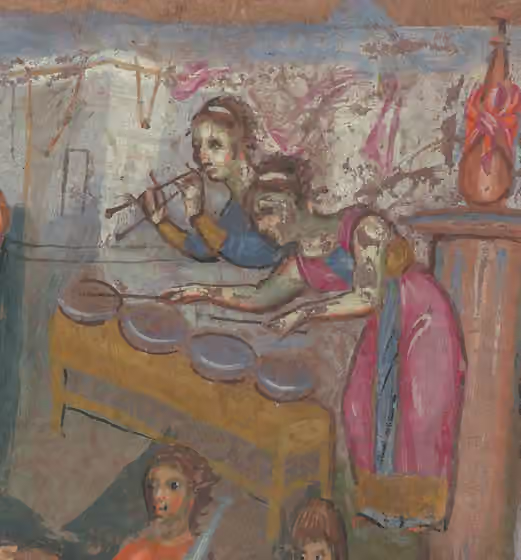
Nama dan identitas
Byzantine music · Nama lain belum tercatat dalam profil ini.
Adaptasi sumber terbuka. Uraian diterjemahkan otomatis menggunakan OPUS-MT en-id (lokal); teks asal dapat diperiksa di setiap bagian. Identitas, lisensi, dan kelengkapan diperiksa secara otomatis. Belum ada tinjauan komunitas atau ahli yang tercatat.
Identitas dan konteks budaya#
Musik Bizantium (Yunani: Βυζαντινή μουσική, Romanized: Vyzantini mousiki) awalnya terdiri dari nyanyian dan himne yang digubah untuk upacara kerajaan Bizantium dan upacara keagamaan Imperium Bizantium dan berlanjut, setelah kejatuhan Konstantinopel pada tahun 1453, dalam tradisi nyanyian liturgi Ortodoks Timur yang dinyanyikan dalam nyanyian Bizantium. Bentuk gerejawi musik Bizantium adalah bentuk yang paling dikenal dewasa ini, karena berbagai tradisi Ortodoks masih dikaitkan dengan warisan musik Bizantium, sewaktu para cantors menyanyikan nyanyian monodik dari buku nyanyian tradisional seperti Sticherarion dan Irmologion.
Musik Bizantium tidak lenyap setelah kejatuhan Konstantinopel. Tradisinya berlanjut di bawah Patriark Konstantinopel, yang setelah penaklukan Ottoman pada tahun 1453 diberi tanggung jawab administratif atas semua orang Kristen Ortodoks Timur di Imperium Ottoman. Selama kemerosotan Imperium Ottoman pada abad ke - 19, negara-negara terpecah - pecah di Balkan menyatakan otonomi atau otonomi dari Patriarkate Konstantinopel. Patriate yang baru dideklarasikan adalah negara merdeka yang ditentukan oleh agama mereka.
Rujukan bagian ini · revisi 1374514378Baca teks sumber bahasa Inggris
Byzantine music (Greek: Βυζαντινή μουσική, romanized: Vyzantini mousiki) originally consisted of the songs and hymns composed for the courtly and religious ceremonial of the Byzantine Empire and continued, after the fall of Constantinople in 1453, in the traditions of the sung Byzantine chant of Eastern Orthodox liturgy. The ecclesiastical forms of Byzantine music are the best known forms today, because different Orthodox traditions still identify with the heritage of Byzantine music, when their cantors sing monodic chant out of the traditional chant books such as the Sticherarion and the Irmologion.
Byzantine music did not disappear after the fall of Constantinople. Its traditions continued under the Patriarch of Constantinople, who after the Ottoman conquest in 1453 was granted administrative responsibilities over all Eastern Orthodox Christians in the Ottoman Empire. During the decline of the Ottoman Empire in the 19th century, burgeoning splinter nations in the Balkans declared autonomy or autocephaly from the Patriarchate of Constantinople. The new self-declared patriarchates were independent nations defined by their religion.
Uraian sumber 2#
Tradisi nyanyian liturgi timur, mencakup dunia berbahasa Yunani, dikembangkan bahkan sebelum pembentukan ibukota Romawi baru, Konstantinopel, pada 330 sampai jatuhnya tahun 1453. Musik Bizantium dipengaruhi oleh tradisi musik Helenistik, musik Yunani klasik, serta tradisi musik keagamaan di Siria dan kebudayaan Ibrani. Sistem oktoecho Bizantium, yang diklasifikasikan menjadi delapan mode, secara khusus dianggap telah diekspor dari Suriah, di mana itu dikenal pada abad ke-6, sebelum penciptaan legendaris biarawan Arab John dari Damaskus Khalifahidate Umayyad.
Istilah musik Bizantium kadang-kadang dikaitkan dengan nyanyian suci Gereja Kristen abad pertengahan yang mengikuti Rite Constantinopolitan. Ada juga identifikasi dari "Musik Byzantine" dengan "Penyanyian liturgi Kristen Timur," yang disebabkan oleh reformasi biara tertentu, seperti reformasi Oktoechos dari Dewan Quinisext (692) dan reformasi belakangan dari Biara Stoudios di bawah abbots Sabas dan Theodore. Triodion yang diciptakan selama reformasi Theodore juga segera diterjemahkan ke dalam bahasa Slavonik, yang juga menuntut adaptasi model melodi untuk prosody bahasa tersebut. Belakangan, setelah Patriarkate and Court kembali ke Konstantinopel pada tahun 1261, ritus katedral yang terdahulu tidak dilanjutkan, tetapi digantikan oleh ritus campuran, yang menggunakan notasi dari Bundartine untuk mengintegrasikan notasi - notasi yang pernah ditulis buku nyanyian (Papadike). Notasi ini telah dikembangkan dalam buku sticherarion yang diciptakan oleh Biara Stoudios, tetapi digunakan untuk buku-buku ritus katedral yang ditulis dalam periode setelah perang salib keempat, sewaktu ritus katedral sudah ditinggalkan di Konstantinopel.
Rujukan bagian ini · revisi 1374514378Baca teks sumber bahasa Inggris
The tradition of eastern liturgical chant, encompassing the Greek-speaking world, developed even before the establishment of the new Roman capital, Constantinople, in 330 until its fall in 1453. Byzantine music was influenced by Hellenistic music traditions, classic Greek music as well as religious music traditions of Syriac and Hebrew cultures. The Byzantine system of octoechos, in which melodies were classified into eight modes, is specifically thought to have been exported from Syria, where it was known in the 6th century, before its legendary creation by Arab monk John of Damascus of the Umayyad Caliphate.
The term Byzantine music is sometimes associated with the medieval sacred chant of Christian Churches following the Constantinopolitan Rite. There is also an identification of "Byzantine music" with "Eastern Christian liturgical chant", which is due to certain monastic reforms, such as the Octoechos reform of the Quinisext Council (692) and the later reforms of the Stoudios Monastery under its abbots Sabas and Theodore. The triodion created during the reform of Theodore was also soon translated into Slavonic, which required also the adaption of melodic models to the prosody of the language. Later, after the Patriarchate and Court had returned to Constantinople in 1261, the former cathedral rite was not continued, but replaced by a mixed rite, which used the Byzantine Round notation to integrate the former notations of the former chant books (Papadike). This notation had developed within the book sticherarion created by the Stoudios Monastery, but it was used for the books of the cathedral rites written in a period after the fourth crusade, when the cathedral rite was already abandoned at Constantinople.
Uraian sumber 3#
Menurut buku panduan nyanyian "Hagiopoli" dari 16 nada gereja (ecoi), penulis karya ini memperkenalkan sistem tonal 10 gema. Meskipun demikian, kedua sekolah ini memiliki kesamaan dengan 4 oktaf (protos, devteros, tritos, dan tetartos), masing-masing memiliki gema kyrio (mode otentik) dengan finalis pada tingkat V mode, dan sebuah plagios echo (mode plagal) dengan catatan akhir pada derajat I. Menurut teori Latin, delapan nada (oktoecho) yang dihasilkannya telah diidentifikasi dengan tujuh mode (spesies ocet) dan trope (tropoi yang berarti transposisi mode ini). Nama-nama trope seperti "Dorian" dll. juga telah digunakan dalam manual nyanyian Yunani, tetapi nama Lydian dan Phrygian untuk oktaf dari devteros dan tritos kadang-kadang telah dipertukarkan. Farononikai Yunani Kuno adalah resepsi Helenis dari program pendidikan Pythagoras didefinisikan sebagai matamemata ("exercises").
Rujukan bagian ini · revisi 1374514378Baca teks sumber bahasa Inggris
According to the chant manual "Hagiopolites" of 16 church tones (echoi), the author of this treatise introduces a tonal system of 10 echoi. Nevertheless, both schools have in common a set of 4 octaves (protos, devteros, tritos, and tetartos), each of them had a kyrios echos (authentic mode) with the finalis on the degree V of the mode, and a plagios echos (plagal mode) with the final note on the degree I. According to Latin theory, the resulting eight tones (octoechos) had been identified with the seven modes (octave species) and tropes (tropoi which meant the transposition of these modes). The names of the tropes like "Dorian" etc. had been also used in Greek chant manuals, but the names Lydian and Phrygian for the octaves of devteros and tritos had been sometimes exchanged. The Ancient Greek harmonikai was a Hellenist reception of the Pythagorean education programme defined as mathemata ("exercises").
Sumber dan cakupan
Kontributor Wikipedia bahasa Inggris · revisi artikel 2026 · diakses 2026-10-15.
Artikel tentang entitas budaya dalam konteks dokumentasinya; tidak mewakili semua variasi, pelaku, atau semua masa. Bagian uraian dipilih, penanda format dibersihkan, dan diterjemahkan otomatis.
Kontributor Wikipedia · CC BY-SA 4.0 · Riwayat dan kredit penulis · pemilihan bagian, penyuntingan bahasa, dan pembersihan penanda format serta terjemahan otomatis merupakan perubahan dari sumber.
Q2090950 — identitas dan asosiasi Wikidata · Kontributor Wikidata · CC0 · revisi 2541397495. Klasifikasi P31 dan asosiasi negara P17; bukan batas budaya, kepemilikan, atau keyakinan semua pelaku. Penjelas tambahan dan rujukan dapat diperiksa pada sumber.
Informasi rilis dan ekspor metadata · Ketentuan penggunaan ulang
Pemeriksaan otomatis identitas, lisensi, sumber revisi, dan kelengkapan; bukan tinjauan ahli. Belum ada tinjauan komunitas atau ahli yang tercatat untuk profil ini. Uraian ini belum mencakup seluruh variasi yang mungkin ada.
Baca metode penyusunan