Nama dan identitas
Conductus · conductus
Adaptasi sumber terbuka. Uraian diterjemahkan otomatis menggunakan OPUS-MT en-id (lokal); teks asal dapat diperiksa di setiap bagian. Identitas, lisensi, dan kelengkapan diperiksa secara otomatis. Belum ada tinjauan komunitas atau ahli yang tercatat.
Identitas dan konteks budaya#
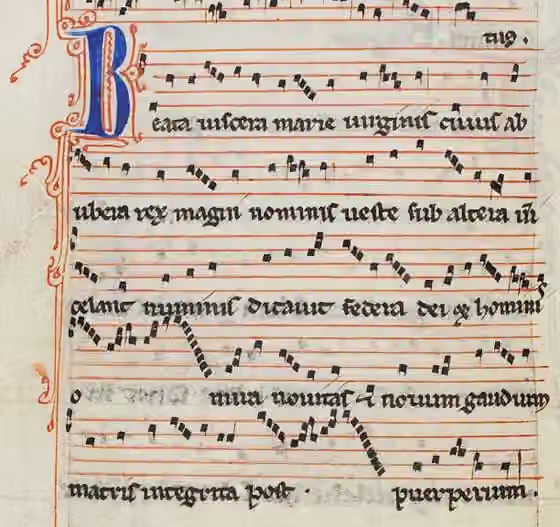
tingkah laku (plural: tingkah laku atau tingkah laku) adalah lagu Latin yang sakral pada Abad Pertengahan, yang puisi dan musiknya baru digubah. Ini bukan pembedahan karena lirik Latinnya sedikit dipinjam dari nyanyian sebelumnya. Condektus adalah utara Perancis dibandingkan, yang berkembang di Aquitaine sekitar sekolah Saint Martial. Istilah ini pertama kali ditemukan di Repertories Aquitania abad kedua belas, tapi koleksi utama kondektur adalah mereka dari Notre Dame sekolah Paris. Koduksi biasanya mencakup satu, dua, atau tiga suara. Sejumlah kecil dari kondektur adalah untuk empat suara. Secara stylist, konduksi adalah jenis diskant (misalnya catatan-balik-note polifoni). Bentuknya bisa berbentuk stropik atau melalui bentuk yang dikomplokan. Genre berkembang dari awal abad kedua belas hingga pertengahan abad ke - 13. Itu adalah salah satu jenis utama komposisi vokal dari ars kuno sejarah musik abad pertengahan.
Rujukan bagian ini · revisi 1378738928Baca teks sumber bahasa Inggris
The conductus (plural: conducti or conductūs) was a sacred Latin song in the Middle Ages, one whose poetry and music were newly composed. It is non-liturgical since its Latin lyric borrows little from previous chants. The conductus was northern French equivalent of the versus, which flourished in Aquitaine around the Saint Martial school. The term is first found in the twelfth-century Aquitanian repertories, but the major collections of conducti are those of the Notre Dame school of Paris. The conductus typically includes one, two, or three voices. A small number of the conducti are for four voices. Stylistically, the conductus is a type of discant (i.e. note-against-note polyphony). Its form can be strophic or through-composed form. The genre flourished from the early twelfth century to the middle of thirteenth century. It was one of the principal types of vocal composition of the ars antiqua period of medieval music history.
Latar dan asal-usul menurut sumber#
Asal kata "konduktus" masih tidak jelas. Kata benda berasal dari kata kerja konducer, yang dapat berarti memimpin, membimbing, atau mengawal. Jadi, menurut sebuah hipotesis, genre itu disebut "konduktus" karena digunakan untuk menemani prosesi sementara Leksis dibawa dari tempat penyimpanannya ke tempat yang akan dibaca. Sebuah manuskrip dalam Institución Colombina, Seville, mencatat bahwa kondus Salve festa mati digunakan untuk peran yang sama dengan himne dengan nama yang sama dan dinyanyikan selama prosesi ke altar. Tapi konducer juga dapat berarti "untuk menyatukan" atau "bergabung bersama." Menurut hipotesis ini, genre disebut "konduktus" karena membawa urutan atau himne bersama-sama dan konduksi didasarkan pada versi kental dari urutan atau himne. Contohnya adalah konduksi Orienti orien, yang berasal dari urutan cetus Noster adalah letus.
Rujukan bagian ini · revisi 1378738928Baca teks sumber bahasa Inggris
The origin of the term "conductus" remains obscure. The noun is derived from the verb conducere, which can mean to lead, guide, or escort. Thus according to one hypothesis, the genre was called "conductus" because it served to accompany a procession while the lectionary was carried from its place of safekeeping to the place from which it was to be read. A manuscript in the Institución Colombina, Seville, records that the conductus Salve festa dies was used for the same role as the hymn with the same name and was sung during the procession to the altar. But conducere can also mean "to bring together" or "join together." According to this hypothesis, the genre was called "conductus" because it brings sequence or hymn together and the conductus was based on a condensed version of a sequence or hymn. An example is the conductus Orienti oriens, which is derived from the sequence Noster cetus iste letus.
Perubahan dan perkembangan#
Genre kondektur ini kemungkinan besar berasal dari selatan Prancis sekitar tahun 1150 dan mencapai puncak perkembangan selama kegiatan Sekolah Notre Dame pada awal abad ke - 13. Condekus adalah mitra utara melawan. Dalam beberapa sumber, versus dan konduksi dapat digunakan secara bergantian, karena keduanya adalah puisi Latin stropik dan aksen. Namun, kondektur mungkin berbeda dengan Aquitanian versus karena inklusi sebuah caudae pada akhirnya. Melisma berkembang (kaudae) dalam konduktus dapat memisahkan teks dan mengganggu struktur keseluruhan sementara Melisma orang Aquitan terus mengalir.
Sebagian besar repertoar yang masih ada terdapat dalam Manuskrip Florence dan juga manuskrip Wolfenbüttel 1099. Dalam dokumen awal, kondektur sering disebut "Benedicamus trope" atau "benedictio." Kodi awal sederhana dan bebas dari bagian berkembang melismatis yang dikenal sebagai caudae. Kaudae muncul lebih sering dalam kondektur terdiri setelah 1200. Kebanyakan kondektur dalam koleksi manuskrip abad ke-13 dari Notre Dame adalah untuk dua atau tiga suara.
Rujukan bagian ini · revisi 1378738928Baca teks sumber bahasa Inggris
The genre of the conductus most likely originated in the south of France around 1150 and reached its peak development during the activity of the Notre Dame School in the early thirteenth century. The conductus is the northern counterpart of the versus. In some sources, the versus and conductus can be interchangeably used, since both of them are strophic and accentual Latin poems. However, the conductus might be different from Aquitanian versus due to its inclusion of a caudae at the end. The melismatic flourish (caudae) in the conductus can separate the text out and disrupt the overall structure while Aquitanian melismas keeps the flow going.
Much of the surviving repertoire is contained in the Florence Manuscript and also the manuscript Wolfenbüttel 1099. In early documents, the conductus was often called "Benedicamus trope" or "benedictio." The early conducti are simple and free from the section of melismatic flourishes known as caudae. Caudae appear more often in conducti composed after 1200. Most conducti in the large thirteenth-century manuscript collections from Notre Dame are for two or three voices.
Sumber dan cakupan
Kontributor Wikipedia bahasa Inggris · revisi artikel 2026 · diakses 2026-10-15.
Artikel tentang entitas budaya dalam konteks dokumentasinya; tidak mewakili semua variasi, pelaku, atau semua masa. Bagian uraian dipilih, penanda format dibersihkan, dan diterjemahkan otomatis.
Kontributor Wikipedia · CC BY-SA 4.0 · Riwayat dan kredit penulis · pemilihan bagian, penyuntingan bahasa, dan pembersihan penanda format serta terjemahan otomatis merupakan perubahan dari sumber.
Q846748 — identitas dan asosiasi Wikidata · Kontributor Wikidata · CC0 · revisi 2515885021. Klasifikasi P31 dan asosiasi negara P17; bukan batas budaya, kepemilikan, atau keyakinan semua pelaku. Penjelas tambahan dan rujukan dapat diperiksa pada sumber.
Informasi rilis dan ekspor metadata · Ketentuan penggunaan ulang
Pemeriksaan otomatis identitas, lisensi, sumber revisi, dan kelengkapan; bukan tinjauan ahli. Belum ada tinjauan komunitas atau ahli yang tercatat untuk profil ini. Uraian ini belum mencakup seluruh variasi yang mungkin ada.
Baca metode penyusunan