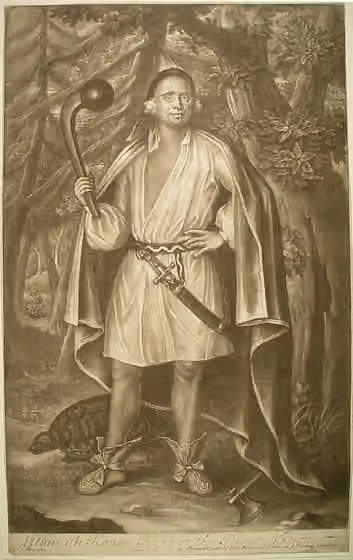
Nama dan identitas
Mohicans · Mahican · Mohican · Muhhekunneuw · Muh-he-con-neok
Adaptasi sumber terbuka. Uraian diterjemahkan otomatis menggunakan OPUS-MT en-id (lokal); teks asal dapat diperiksa di setiap bagian. Identitas, lisensi, dan kelengkapan diperiksa secara otomatis. Belum ada tinjauan komunitas atau ahli yang tercatat.
Identitas dan konteks kelompok#
Orang Mohicans (atau ) adalah penduduk asli di hutan sebelah timur laut yang berbahasa Algonquian Timur. Secara historis, mereka berbasis di Upstate New York. Hari ini, mereka terdaftar di Komunitas Stockbridge di Wisconsin.
Orang Mohican tinggal di Lembah Sungai Hudson bagian atas, termasuk pengaruh Sungai Mohawk (di mana sekarang Albany, New York, dikembangkan) dan ke bagian barat New England berpusat di hulu Sungai Housatonic. Setelah 1680, karena konflik dengan Mohawk yang kuat ke barat selama Perang Berang-berang, banyak yang didorong tenggara ke seberang perbatasan barat Massachusetts sekarang dan Pegunungan Taconic ke Berkshire County sekitar Stockbridge, Massachusetts.
Rujukan bagian ini · revisi 1379351450Baca teks sumber bahasa Inggris
The Mohicans or Mahicans ( or ) are an Indigenous people of the Northeastern Woodlands who spoke an Eastern Algonquian language. Historically, they were based in Upstate New York. Today, they are enrolled in the federally recognized Stockbridge Munsee Community in Wisconsin.
The Mohicans lived in the upper tidal Hudson River Valley, including the confluence of the Mohawk River (where present-day Albany, New York, developed) and into western New England centered on the upper Housatonic River watershed. After 1680, due to conflicts with the powerful Mohawk to the west during the Beaver Wars, many were driven southeastward across the present-day Massachusetts western border and the Taconic Mountains to Berkshire County around Stockbridge, Massachusetts.
Uraian sumber 2#
Pada saat pertama kali mereka bertemu dengan pedagang Eropa di sepanjang sungai pada tahun 1590-an, orang Mohican tinggal di dalam dan di sekitar Sungai Hudson (atau ). Setelah tahun 1609, pada saat pemukiman Belanda di New Netherland, mereka juga berjarak di sepanjang Sungai Mohawk sebelah timur dan Sungai Hoosik, dan di sebelah selatan sepanjang Hudson menuju Roeliff Jansen Kill, tempat mereka berbatasan dengan penduduk Wappinger. Bangsa ini menghuni daerah sungai dan bagian dalamnya di sebelah selatan hingga sekarang di New York City.
Sebagian besar komunitas Mohican terletak di sepanjang pasang surut atas Sungai Hudson dan di sepanjang gudang air Kinderhook-Claverack-Taghkanic Creek, Roiff Jansen Kill, Catskil Creek, dan daerah yang berdekatan dari tempat penyimpanan Housatonic. Daerah Mohican mencapai sepanjang Sungai Hudson gudang air timur laut ke Wood Creek hanya selatan Danau Champlain.
Rujukan bagian ini · revisi 1379351450Baca teks sumber bahasa Inggris
At the time of their first contact with Europeans traders along the river in the 1590s, the Mohican were living in and around the Hudson River (or ). After 1609, at the time of the Dutch settlement of New Netherland, they also ranged along the eastern Mohawk River and the Hoosic River, and south along the Hudson to the Roeliff Jansen Kill, where they bordered on the Wappinger people. This nation inhabited the river area and its interior southward to today's New York City.
Most of the Mohican communities lay along the upper tidal reaches of the Hudson River and along the watersheds of Kinderhook-Claverack-Taghkanic Creek, the Roeliff Jansen Kill, Catskil Creek, and adjacent areas of the Housatonic watershed. Mohican territory reached along Hudson River watersheds northeastward to Wood Creek just south of Lake Champlain.
Kehidupan dan praktik budaya#
Desa-desa Mohican diatur oleh sachem turun temurun disarankan oleh dewan tetua klan. Mereka memiliki sistem ikatan perkawinan, dengan harta dan warisan (termasuk kantor turun - temurun) yang melewati garis keturunan ibu. Utusan injil Moravian John Heckewelder dan antropolog Lewis H. Morgan keduanya belajar dari informan Mohican bahwa masyarakat matrilineal mereka dibagi menjadi tiga phratries (Turkey, Turtle, dan Wolf). Ini dibagi menjadi klan atau subclans, termasuk klan Bear berpotensi terkemuka. Temuan ini didukung oleh bukti tanda tangan Mohican pada perjanjian dan perbuatan darat (lihat karya Shirley Dunn).
Dewan umum sachems bertemu secara teratur di Scodac (timur Albany sekarang) untuk memutuskan hal-hal penting mempengaruhi seluruh konfederasi. Dalam sejarahnya tentang suku Indian Sungai Hudson, Edward Manning Ruttenber menggambarkan klan Mohican sebagai Beruang, Turki, Penyu, dan Serigala. Masing-masing memiliki peranan dalam kehidupan rakyat, dan Serigala melayani sebagai pejuang di utara untuk membela melawan Mohawk, yang paling timur dari Lima Bangsa dari Haudenosanee.
Rujukan bagian ini · revisi 1379351450Baca teks sumber bahasa Inggris
The Mohican villages were governed by hereditary sachems advised by a council of clan elders. They had a matrilineal kinship system, with property and inheritance (including such hereditary offices) passed through the maternal line. Moravian missionary John Heckewelder and early anthropologist Lewis H. Morgan both learned from Mohican informants that their matrilineal society was divided into three phratries (Turkey, Turtle, and Wolf). These were divided into clans or subclans, including a potentially prominent Bear Clan. This finding is supported by the evidence of Mohican signatures on treaties and land deeds (see the works of Shirley Dunn).
A general council of sachems met regularly at Scodac (east of present-day Albany) to decide important matters affecting the entire confederacy. In his history of the Indians of the Hudson River, Edward Manning Ruttenber described the clans of the Mohican as the Bear, the Turkey, the Turtle, and the Wolf. Each had a role in the lives of the people, and the Wolf served as warriors in the north to defend against the Mohawk, the easternmost of the Five Nations of the Haudenosaunee.
Nama dan istilah#
Suku itu dikenal dengan nama tempat mereka tinggal (yang tak pernah kering). Menurut Daniel G. Brinton dan James Hammond Trumbull, "dua otoritas terkenal dalam sejarah Mohican," kata itu mengacu pada sebuah badan air yang mengalir ke dua arah, yang pasang ke sebagian besar kisaran Mohican, sehingga mereka bernama Sungai Hudson, atau sungai dengan air yang tidak pernah diam. Oleh karena itu, mereka, bersama suku-suku lain yang tinggal di sepanjang Sungai Hudson, seperti Munsee ke barat mereka, yang dikenal dengan dialek Lenape yang mereka bicarakan, dan Wappinger ke selatan, disebut " Indian Sungai " oleh orang Belanda dan Inggris.
Rujukan bagian ini · revisi 1379351450Baca teks sumber bahasa Inggris
The tribe identified by the place where they lived: (or "people of the continually flowing waters"). According to Daniel G. Brinton and James Hammond Trumbull, "two well-known authorities on Mohican history", the word refers to a body of water that flows in both directions, being tidal to most of its Mohican range, so they named the Hudson River , or the river with waters that are never still. Therefore, they, along with other tribes living along the Hudson River, such as the Munsee to their west, known by the dialect of Lenape that they spoke, and Wappinger to the south, were called "the River Indians" by the Dutch and English.
Sumber dan cakupan
Kontributor Wikipedia bahasa Inggris · revisi artikel 2026 · diakses 2026-10-14.
Artikel tentang kelompok dalam konteks dokumentasinya; tidak mewakili semua anggota atau semua masa. Bagian uraian dipilih, penanda format dibersihkan, dan diterjemahkan otomatis.
Kontributor Wikipedia · CC BY-SA 4.0 · Riwayat dan kredit penulis · pemilihan bagian, penyuntingan bahasa, dan pembersihan penanda format serta terjemahan otomatis merupakan perubahan dari sumber.
Q776280 — identitas dan asosiasi Wikidata · Kontributor Wikidata · CC0 · revisi 2546792359. Identitas P31 dan asosiasi negara P17; bukan batas budaya, kepemilikan, atau keyakinan semua anggota. Penjelas tambahan dan rujukan dapat diperiksa pada sumber.
Informasi rilis dan ekspor metadata · Ketentuan penggunaan ulang
Pemeriksaan otomatis identitas, lisensi, sumber revisi, dan kelengkapan; bukan tinjauan ahli. Belum ada tinjauan komunitas atau ahli yang tercatat untuk profil ini. Uraian ini belum mencakup seluruh variasi yang mungkin ada.
Baca metode penyusunan