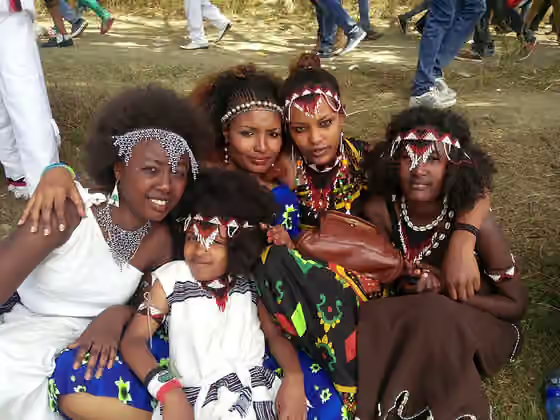
Nama dan identitas
Suku Oromo · Oromo · Oromoo · Galla people · Galla · Gallas · Gala · Gallinyas · Ilma Orma · Orma · Oromota · Oromo people
Adaptasi sumber terbuka. Uraian diterjemahkan otomatis menggunakan OPUS-MT en-id (lokal); teks asal dapat diperiksa di setiap bagian. Identitas, lisensi, dan kelengkapan diperiksa secara otomatis. Belum ada tinjauan komunitas atau ahli yang tercatat.
Identitas dan konteks kelompok#
Oromoo, Pron. ORR-åm-oh) adalah kelompok etnik Kushitic yang tinggal di wilayah Oromia di Etiopia dan bagian-bagian utara Kenya. Mereka menggunakan bahasa Oromo (juga disebut Afaan Oromoo), yang merupakan bagian dari cabang bahasa Kusyit dari keluarga berbahasa Afroasiatik.
Mereka adalah salah satu kelompok etnik terbesar di Etiopia. Menurut sensus Etiopia terakhir pada tahun 2007, Oromo berjumlah 25,488.344 orang atau 34,5% penduduk Etiopia. Perkiraan terkini, Oromo mencakup 41.500,000 orang, atau 35,8% dari total penduduk Etiopia yang diperkirakan berjumlah 116.000.000 orang.
Rujukan bagian ini · revisi 1377921916Baca teks sumber bahasa Inggris
The Oromo people (Oromo: Oromoo, pron. ORR-əm-oh) are a Cushitic ethnic group who live in the Oromia region of Ethiopia and parts of northern Kenya. They speak the Oromo language (also called Afaan Oromoo), which is part of the Cushitic branch of the Afroasiatic language family.
They are one of the largest ethnic groups in Ethiopia. According to the last Ethiopian census of 2007, the Oromo numbered 25,488,344 people or 34.5% of the Ethiopian population. Recent estimates have the Oromo comprising 41,500,000 people, or 35.8% of the total Ethiopian population estimated at 116,000,000.
Latar dan asal-usul menurut sumber#
Ilmu bahasa sejarah dan penelitian ethnologi yang komparatif menunjukkan bahwa orang Oromo mungkin berasal dari sekitar danau Danau Chew Bahir dan Danau Chamo. Dampak dari abad ke - 16 Ethiopian–Adal Perang menyebabkan Oromos pindah ke utara. Meskipun Oromo orang-orang telah tinggal di daerah itu untuk waktu yang lama, campuran etnik orang-orang yang tinggal di sini belum jelas. Nama asli wilayah-wilayah itu diganti dengan nama klan Oromo yang menetap di atasnya sementara penduduk pribumi itu berasimilasi.
Menurut Herbert S. Lewis, baik Oromo maupun orang Somalia berasal dari Etiopia selatan tetapi Somalia diperluas ke timur dan utara jauh lebih awal daripada Oromo, dan Oromo tinggal hanya di Ethiopia selatan dan Kenya utara sampai ekspansi Oromo dimulai sekitar 1530. yang sekarang telah mengembangkan konotasi derogasi, tetapi dokumen ini umumnya ditulis oleh anggota kelompok etnis lain. Istilah Galla digunakan untuk orang Oromo oleh Abyssinian, Arab dan Somalia. Makna awal istilah ini sangat diperdebatkan. Teori yang ketinggalan zaman namun populer di kalangan sejarawan Eropa selama abad ke - 19 mengenai asal mula istilah itu adalah kepercayaan bahwa teori itu berasal dari bahasa Ibrani (חלב) dan Yunani (Gála), susu, karena kepercayaan yang sudah ketinggalan zaman bahwa Oromos kehilangan orang kulit putih. Teori nama ini khususnya populer di kalangan sejarawan Jerman yang pernah percaya bahwa Oromo berkerabat dengan suku Galika kuno di Prancis.
Rujukan bagian ini · revisi 1377921916Baca teks sumber bahasa Inggris
Historical linguistics and comparative ethnology studies suggest that the Oromo people probably originated around the lakes Lake Chew Bahir and Lake Chamo. The aftermath of the sixteenth century Ethiopian–Adal war led Oromos to move to the north. While Oromo people have lived in the region for a long time, the ethnic mixture of peoples who have lived here is unclear. The native names of the territories were replaced by the name of the Oromo clans who settled on it while the indigenous people were assimilated.
According to Herbert S. Lewis, both the Oromo and the Somali people originated in southern Ethiopia but the Somali expanded to the east and north much earlier than the Oromo, and the Oromo lived only in southern Ethiopia and northern Kenya until the Oromo expansion began about 1530. which has now developed derogatory connotations, but these documents were generally written by members of other ethnic groups. The term Galla was in use for Oromo people by the Abyssinians, Arabs and Somalis. The original meaning of the term is heavily disputed. An outdated but popular theory among European historians during the 19th century regarding the origin of the term was the belief that it derives from the Hebrew (חלב) and Greek (Gála), milk, due to the outdated belief that the Oromos were lost white men. This name theory was especially popular among German historians who once believed that the Oromo were related to the ancient Gallic tribe in France.
Perubahan dan konteks sejarah#
Kata-kata paling awal yang dicatat tentang Oromos berasal dari kartografer Italia (Vetian) Fra Mauro, yang mencatat sebuah Sungai Galla di sebelah selatan Sungai Awuh, di Mappomondo, atau peta dunia yang terkenal, yang rampung pada tahun 1460. Sejarah rinci pertama orang Oromo berasal dari biksu Ethiopia Bahrey yang menulis Zenahu la Galla, atau "Sejarah Galla" pada tahun 1593. Mereka juga disebutkan dalam catatan yang ditinggalkan Abba Paulos, Joao Bermudes, Jerónimo Lobo, Galawdewos, Sarsa Dengel dan yang lainnya. Catatan-catatan ini menunjukkan bahwa Oromo adalah orang-orang yang menjadi pastoris yang mulai bergerak dalam jumlah besar ke dataran tinggi Etiopia tengah dari tanah tempat mereka di dataran Etiopia bagian selatan selama abad ke - 16. Faktor utama gerakan ini adalah militerisasi sistem Gadaa. Seorang pemimpin yang dipilih oleh sistem gadaa hanya berkuasa selama 8 tahun, dengan pemilu berlangsung pada akhir 8 tahun.
Rujukan bagian ini · revisi 1377921916Baca teks sumber bahasa Inggris
The earliest recorded mention of the Oromos comes from the Italian (Venetian) cartographer Fra Mauro, who notes a Galla River south of the Awash River, in his famous Mappomondo, or map of the world, completed in 1460. The first detailed history of the Oromo people comes from the Ethiopian monk Bahrey who wrote Zenahu la Galla, or "History of the Galla" in 1593. They are also mentioned in the records left by Abba Paulos, Joao Bermudes, Jerónimo Lobo, Galawdewos, Sarsa Dengel and others. These records suggest that the Oromo were a pastoralist people who began to move in large numbers into the central highlands of Ethiopia from their cradleland in the plains of southern Ethiopia during the 16th century. A major factor of this movement was the militarization of the Gadaa system. A leader elected by the gadaa system remains in power only for 8 years, with an election taking place at the end of those 8 years.
Sumber dan cakupan
Kontributor Wikipedia bahasa Inggris · revisi artikel 2026 · diakses 2026-10-14.
Artikel tentang kelompok dalam konteks dokumentasinya; tidak mewakili semua anggota atau semua masa. Bagian uraian dipilih, penanda format dibersihkan, dan diterjemahkan otomatis.
Kontributor Wikipedia · CC BY-SA 4.0 · Riwayat dan kredit penulis · pemilihan bagian, penyuntingan bahasa, dan pembersihan penanda format serta terjemahan otomatis merupakan perubahan dari sumber.
Q318674 — identitas dan asosiasi Wikidata · Kontributor Wikidata · CC0 · revisi 2556744319. Identitas P31 dan asosiasi negara P17; bukan batas budaya, kepemilikan, atau keyakinan semua anggota. Penjelas tambahan dan rujukan dapat diperiksa pada sumber.
Informasi rilis dan ekspor metadata · Ketentuan penggunaan ulang
Pemeriksaan otomatis identitas, lisensi, sumber revisi, dan kelengkapan; bukan tinjauan ahli. Belum ada tinjauan komunitas atau ahli yang tercatat untuk profil ini. Uraian ini belum mencakup seluruh variasi yang mungkin ada.
Baca metode penyusunan